

Not All Calcium-Removal Products Are Equal

How to Choose the Right One for Winter Maintenance

In a previous article, we explained how calcium-removal products work, highlighting the chemistry behind dissolving mineral deposits left by de-icing salts. Understanding this mechanism is essential.
In practice, however, another question often arises: do all calcium-removal products deliver the same results?
The answer is no.
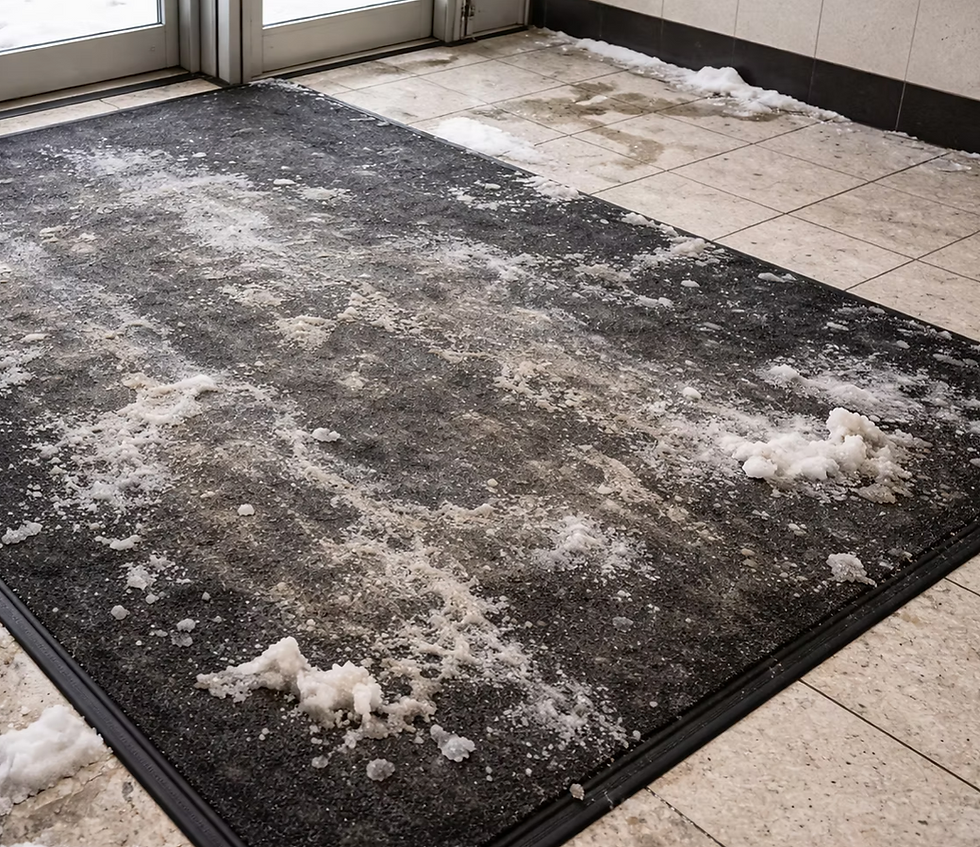
In Canada, winter maintenance is not limited to managing snow and slush. Calcium, from de-icing salts, accumulates rapidly in entrances, corridors, and elevator landings. It leaves unsightly white residue, can damage flooring, and increases the workload for maintenance teams.
In this context, choosing the right product becomes a strategic decision.
Why Not All Calcium-Removal Products Are Equal
Although many products claim to eliminate white residue, their effectiveness depends on specific characteristics. Products truly adapted for calcium management generally share three key elements:
1. Genuine Neutralizing Action
A high-quality calcium-removal product does not merely mask deposits—it neutralizes them. With a proper formulation, it dissolves mineral residues left by de-icing salts and prevents persistent white buildup.
2. Surface-Safe Formulations
Premium products are designed for multiple surfaces, including ceramic, vinyl, polished concrete, and mats. Compatibility verification remains essential to preserve floor finishes.
3. Long-Term Material Protection
Unlike plain water or unsuitable detergents, well-formulated calcium-removal products help reduce premature wear. They are part of a preventive maintenance approach, rather than a corrective one.
Product Selection Matters, But So Does Application
As explained in our article on how calcium products work, chemistry plays a central role. However, even the best product can produce disappointing results if applied incorrectly:
Correct Dilution: Following manufacturer instructions ensures optimal balance between effectiveness and surface protection. Overuse does not remove more calcium and may damage finishes.
Target Application: Entrances, lobbies, and elevator landings are the most exposed areas. Focusing on these zones ensures effort is directed where it is needed most.
Maintain Proper Frequency: During intense winter conditions, regular—sometimes daily—maintenance prevents calcium buildup and simplifies long-term cleaning.
Use Appropriate Equipment: Microfiber cloths, scrubbers, and low-flow sprayers enhance product performance while reducing labor.
Why White Residue May Persist
If white marks remain after applying an appropriate product, the issue is often technique, not the product itself. Calcium must be removed after being solubilized—vacuumed, mopped, or rinsed. Simply spreading calcium-laden water across the floor risks redistributing the residue.
A Concern for Managers and Service Providers
For building managers, investing in a high-quality calcium product and training staff directly contributes to floor longevity and the professional appearance of spaces.
For service providers, offering neutralizing solutions is part of a professional differentiator, demonstrating genuine care for protecting clients’ investments.
In Summary: Understand, Then Choose
Our previous article explains how calcium-removal products work.
This article focuses on how to choose and apply them correctly.
Calcium-removal products are not a luxury—they are an essential tool in Canadian winter maintenance. Properly selected and applied, they reduce restoration costs, enhance the appearance of spaces, and improve occupant satisfaction.
Given the wide range of products on the market, ValkarTech experts can guide you in validating your choices and optimizing your winter maintenance practices.

Comments